- Company News
- 2026-08-26
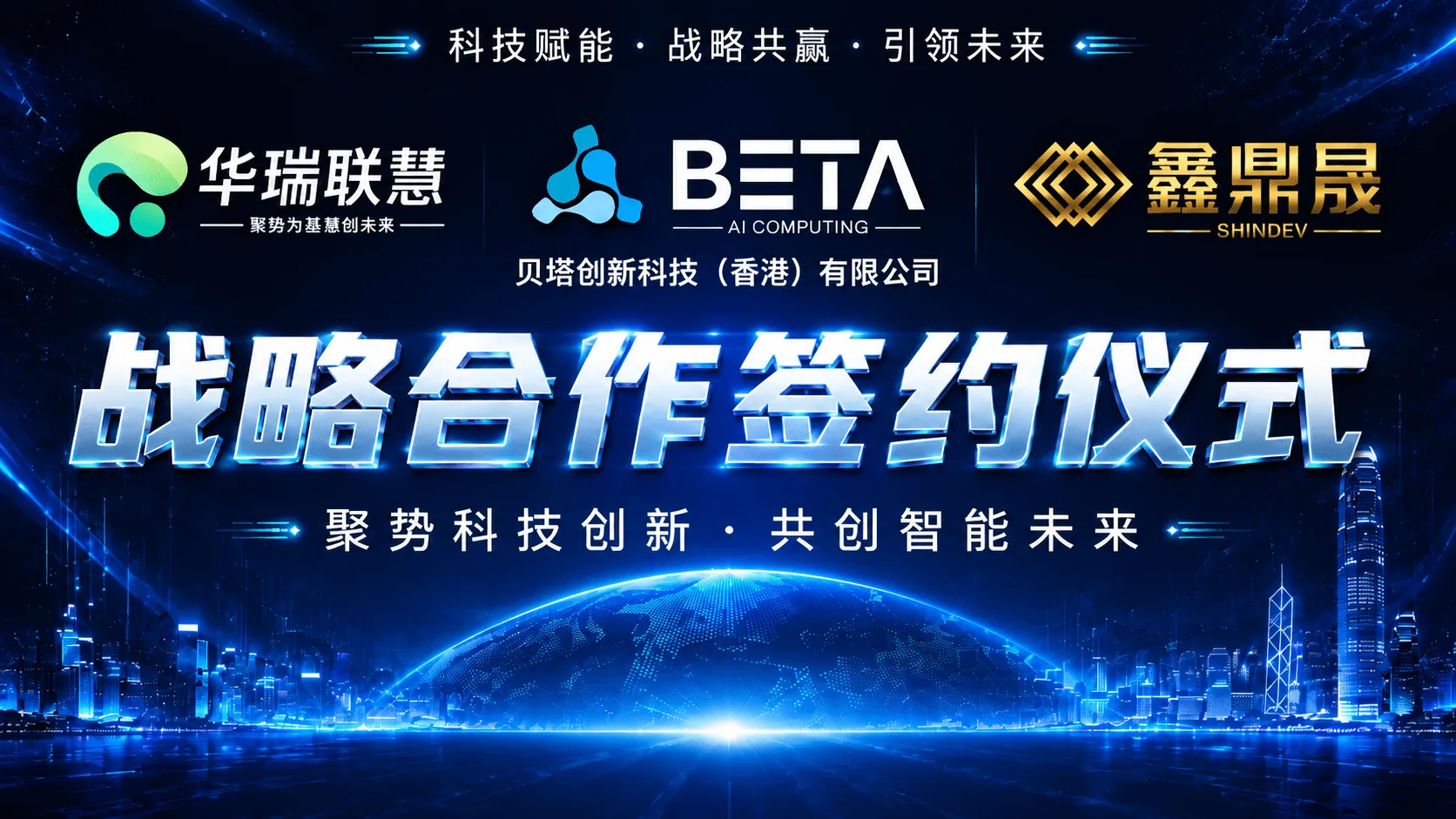
A Covenant of Trust Across Cycles: Huarui SmartLink and Beta Creative Technology Establish an 18-Year Strategic Partnership
Preface: When the Bubble Recedes, Look for the Real Infrastructure Builders
In 2026, the global AI industry is undergoing a profound reassessment of value.
Following the industry-wide disruption and technological paradigm shift triggered by DeepSeek, the way the market evaluates artificial intelligence is rapidly moving away from the early-stage logic of “narrative-driven growth” toward the validation of tangible industrial value. Capital is no longer focused solely on model parameters, technological concepts, and growth stories. Instead, investors are applying far greater scrutiny to ROIC (Return on Invested Capital), infrastructure efficiency, engineering delivery capabilities, and long-term commercial sustainability.
As the tide gradually recedes, what ultimately determines whether a company can endure multiple cycles is no longer how ambitious its story sounds, but whether its infrastructure truly exists, whether its technology can operate reliably, whether projects can be delivered consistently, and whether its business model can withstand the test of time.
It was against this backdrop that Huarui SmartLink spent eight months conducting a systematic review and in-depth assessment of dozens of AI computing companies across the Asia-Pacific region.
From the very beginning of the screening process, we established a clear standard:
Reject pure concept speculation. Do not chase short-term arbitrage. Focus only on industrial builders that are genuinely rooted in physical AI computing infrastructure and possess real capabilities in technology implementation, engineering delivery, and long-term operations.
After multiple rounds of screening, many projects dependent on conceptual packaging and lacking tangible infrastructure or sustained delivery capabilities gradually fell out of consideration.
Ultimately, Beta Creative Technology (HK) Limited (“Beta Creative Technology” or “Beta”) entered the final shortlist based on its experience in AI computing infrastructure development, engineering capabilities, and full-stack technology portfolio. It subsequently underwent an eight-month dedicated and in-depth verification process.
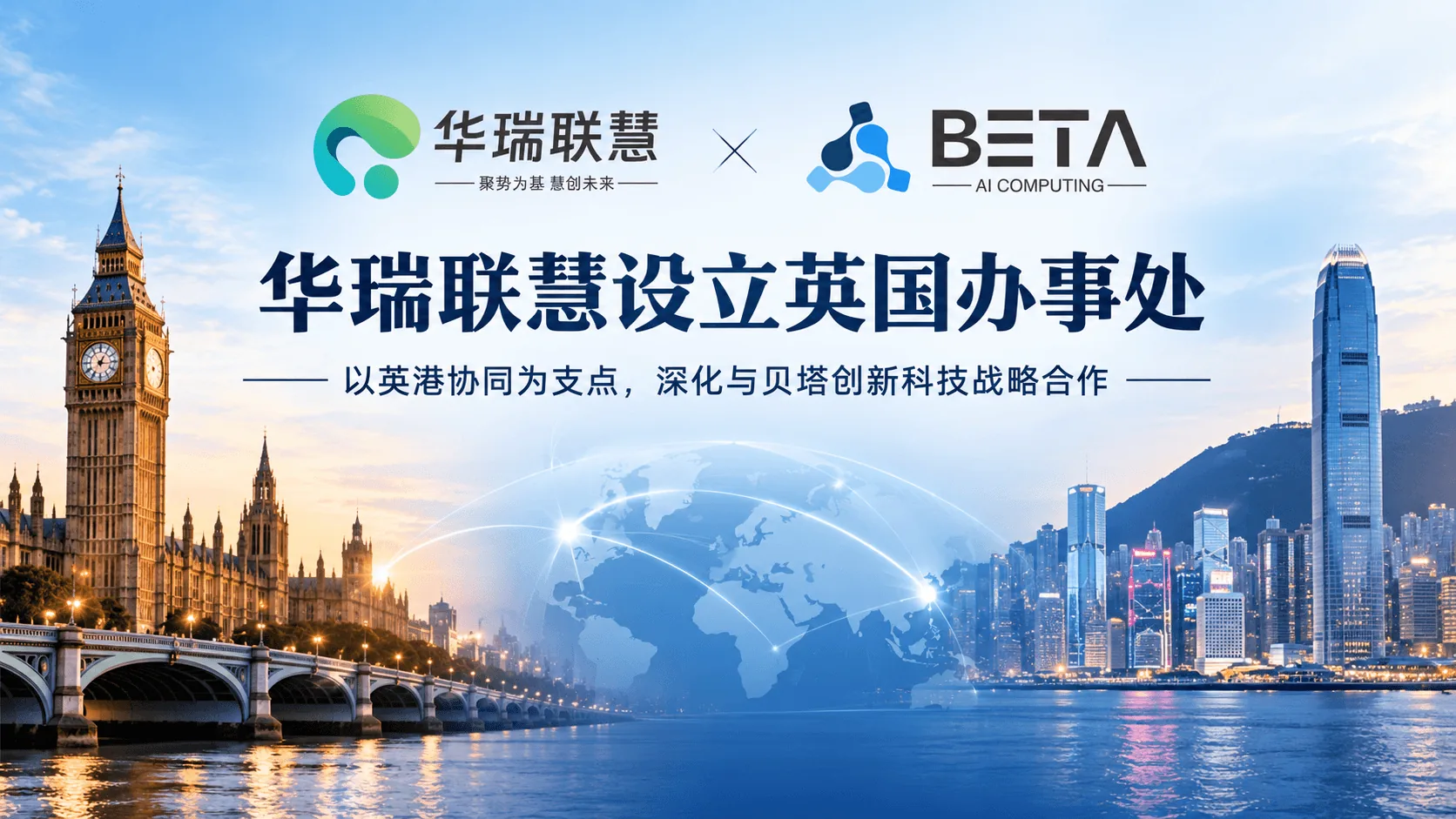
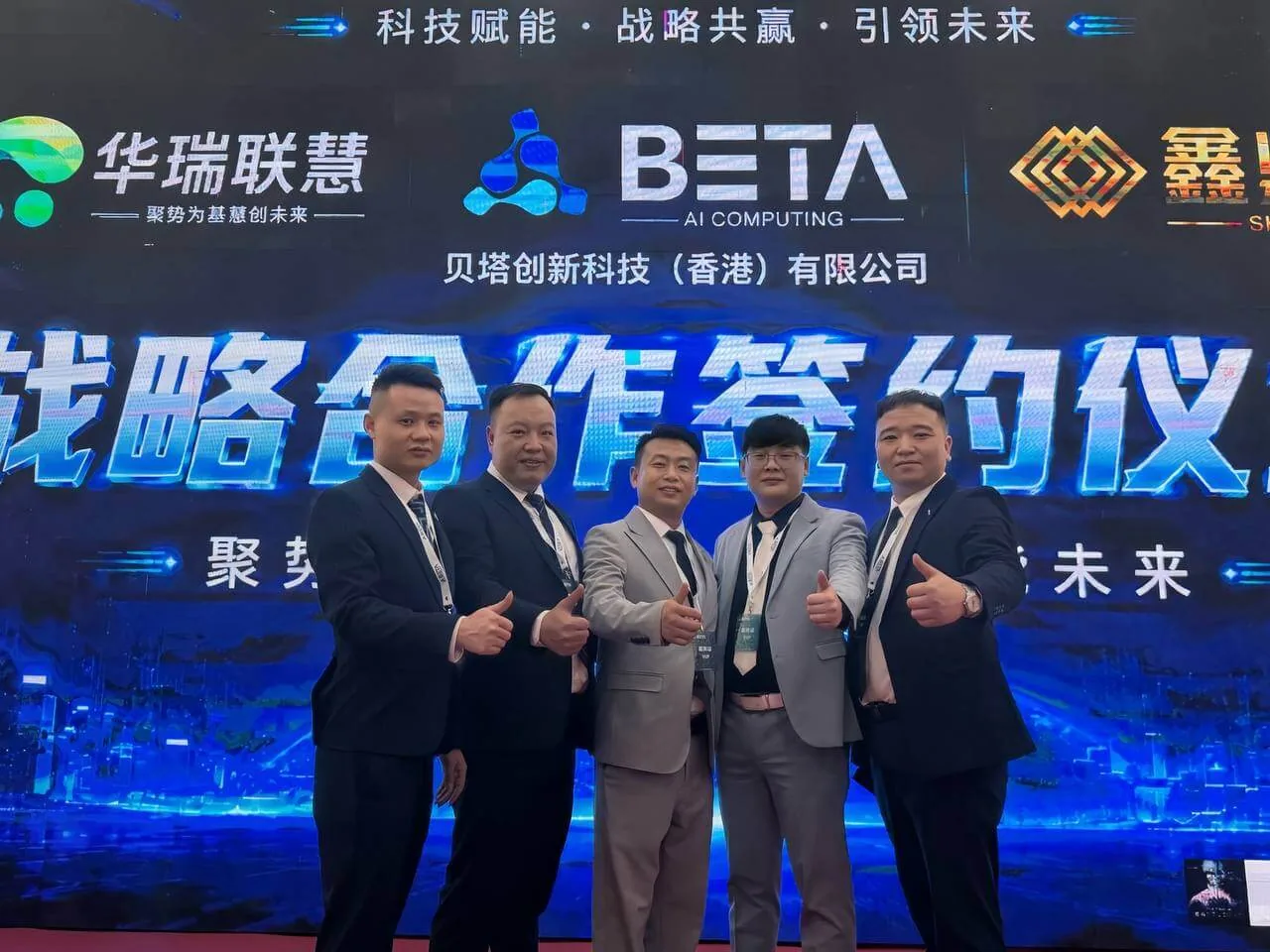
Based on this extended research and multidimensional assessment, Huarui SmartLink and Beta Creative Technology reached a strategic cooperation understanding.
The two parties have decided to move beyond a conventional financial investment relationship and position their future cooperation around three principles:
Strategic Alliance, Long-Term Collaboration, and Joint Industrial Ecosystem Development.
This represents more than a connection between capital and industry. It is an attempt by both parties to adopt an 18-year strategic horizon, jointly navigating technological iteration, industrial restructuring, and economic cycles while building a more stable and sustainable long-term partnership across AI computing infrastructure and the Physical AI ecosystem in the Asia-Pacific region.
Chapter I
Eight Months of In-Depth Due Diligence: The Truly Scarce Capability Is “Delivery”
Over the past eight months, Huarui SmartLink’s investment research team did not limit its assessment of Beta Creative Technology to business plans, pitch decks, or technological concepts.
Instead, we focused on one simple but fundamental question:
Can the technology actually work? Can the infrastructure actually be delivered? Can the business model actually sustain itself?
With this question at the center of our research, the team conducted continuous verification of Beta across multiple dimensions, including technology, engineering, operations, compliance, and resilience under industry cycles.
I. Technology Architecture Review: From “Owning Technology” to “Validating Technology”
The team examined Beta’s core technology architecture, including records related to the tape-out of its proprietary 7nm chip, ownership of liquid-cooling system patents, hybrid-cloud scheduling algorithms, and the underlying technical logic of these systems.
The objective was not to focus on technical terminology itself, but to determine whether these technologies could form a complete, operational, and continuously evolving engineering system.
The key question was whether Beta genuinely possessed full-stack technology integration and engineering capabilities, rather than simply assembling independent modules or integrating third-party solutions.
II. Deployment Capability Verification: Let Real Operating Data Speak
The research team conducted on-site inspections of a 100P AI Computing Center in the Greater Bay Area, examining its actual operating conditions and analyzing raw backend operational data, including GPU utilization efficiency, energy efficiency, and overall engineering management capabilities.
The relevant operating data indicated that the project achieved:
Effective GPU utilization: 85.6%
PUE: 1.12
These figures reflect more than the scale of the infrastructure itself. More importantly, they demonstrate Beta’s integrated capabilities in computing-resource scheduling, energy management, liquid-cooling systems, and engineering operations.
For capital-intensive AI infrastructure, long-term competitiveness is often determined not by “how much computing power you own,” but by:
How reliably and efficiently each unit of computing power can operate—and how much sustainable commercial value it can generate.
III. Risk Control and Compliance Review: Validating Delivery Capabilities in Complex Environments
For sectors such as financial services and government, where data security and regulatory compliance requirements are particularly stringent, the research team placed special emphasis on reviewing Beta’s private deployment capabilities, data-isolation mechanisms, and model-auditing systems.
The primary objective was to verify whether Beta could successfully deploy AI infrastructure for complex enterprise and institutional clients under the following conditions:
Data remains within the designated domain, models remain auditable, and systems remain manageable and controllable.
IV. Cycle Stress Testing: Evaluating Performance Not Only in Good Times, but Also Under Pressure
The AI industry has never followed a linear growth trajectory.
Accordingly, Huarui SmartLink conducted multiple stress-test scenarios covering computing-price competition, rapid improvements in algorithmic efficiency, continued declines in inference costs, and potential new technological breakthroughs comparable to DeepSeek.
Our focus was not simply on how quickly a company could grow during a period of strong industry momentum.
The more important question was:
When the industry enters a period of price competition, rapid technological disruption, or capital contraction, can the company still maintain stable operations and disciplined cash-flow management?
Following this sustained verification process, Huarui SmartLink ultimately identified Beta as an important strategic cooperation partner based primarily on three core assessments.
First: Execution Capability
Beta possesses the integrated execution capability required to transform AI computing infrastructure and Physical AI industry plans into tangible projects.
Its capabilities span multiple critical stages of AI infrastructure development—from technical design and infrastructure construction to operations, maintenance, and customer delivery.
In today’s AI industry, companies capable of transforming technological blueprints into continuously operating systems remain relatively scarce.
Second: A Shared Commitment to Long-Termism
AI infrastructure is inherently characterized by heavy capital investment, long development cycles, and rapid technological iteration.
Participants must therefore accept a fundamental reality:
Infrastructure with genuine long-term value cannot be built through short-term arbitrage.
Beta’s commitment to long-term infrastructure development is highly aligned with Huarui SmartLink’s own philosophy of long-term industrial value creation.
Third: Structural Complementarity
The growing complexity of the future AI ecosystem means that no single company is likely to possess all the resources required to succeed independently.
Beta brings technology, engineering, and physical operational capabilities, while Huarui SmartLink can contribute strategic resource organization, capital coordination, industrial research, and ecosystem-partner connectivity.
The essence of this partnership is therefore not simply:
“Capital + Project.”
Rather, it represents:
Structural complementarity between industrial execution capabilities and strategic resource orchestration capabilities.
Chapter II
The “Three-Six Strategy”: An 18-Year Horizon for Navigating Industrial Cycles
Based on their assessment of the long-term trajectory of the global AI computing industry, the two parties have proposed a “Three-Six Strategic Cooperation Plan.”
The “Three-Six Strategy” means:
Three strategic stages, each spanning six years, forming an 18-year long-term cooperation framework.
I. Industry Outlook: AI Value Is Expanding from Individual Technologies Across the Entire Industrial Chain
The global AI industry is increasingly taking shape around a clear structural pattern.
At one end lies a highly concentrated market for foundational computing power, core algorithms, and advanced semiconductors.
These areas are characterized by exceptionally high technological, capital, and scale barriers, with market concentration increasingly favoring leading players.
At the other end lies a rapidly expanding landscape of industry applications, real-world deployment scenarios, and vertical markets.
As model capabilities become increasingly commoditized and inference costs continue to decline, the value of AI is expanding beyond its technological origins toward infrastructure, engineering delivery, industry applications, and broader industrial ecosystems.
This suggests that the next generation of long-term AI opportunities may no longer be defined solely by:
“Who has the most powerful model?”
Instead, the more important question may become:
Who can connect computing power, models, infrastructure, and real industrial applications into a functioning system?
II. Why 18 Years?
Huarui SmartLink’s research team believes that the AI industry will continue to experience multiple rounds of technological iteration, industry consolidation, and changes in the capital environment.
Under this long-term industrial research framework, the two parties intend to use six years as a strategic review and adjustment cycle, dividing the overall cooperation into three stages.
Through this 18-year strategic framework, the parties aim to reduce the influence of short-term market volatility on long-term industrial development while continuously adjusting resource allocation and strategic priorities across different cycles.
Phase I (2026–2032): Foundation
The core objective of the first phase is to establish fundamental capabilities.
The focus will be on developing core AI computing nodes in the Greater Bay Area, followed by gradual expansion into Southeast Asia, ultimately creating AI computing infrastructure and service capabilities serving the broader Asia-Pacific region.
Key themes:
Infrastructure · Engineering Capabilities · Regional Nodes · Commercial Validation
Phase II (2032–2038): Expansion
As the Physical AI industry matures, the scope of cooperation is expected to expand into robotics, autonomous driving, and other intelligent terminal applications.
Computing infrastructure will also evolve beyond centralized AI computing centers toward edge and endpoint environments, gradually forming a broader distributed edge-intelligence computing network.
Key themes:
Physical AI · Robotics · Autonomous Driving · Edge Computing
Phase III (2038–2044): Ecosystem
Building on the foundations established during the first two phases, the parties plan to further develop a global, distributed intelligent computing network while promoting the international deployment of mature technology systems, operational expertise, and relevant industry standards.
The ultimate objective is to evolve from:
“Building AI Computing Infrastructure”
toward:
“Building an Intelligent Infrastructure Ecosystem.”
Key themes:
Global Networks · Industrial Ecosystems · Technology Export · Standards Export
III. Phase I Capital Cooperation Framework
Under the current strategic cooperation plan, the first phase is expected to establish a corresponding capital framework based on Beta’s physical assets, technology portfolio, and long-term industrial value.
Strategic Valuation:
Beta’s overall strategic valuation is proposed to be anchored at US$800 million.
Strategic Capital:
The current round proposes the release of 10% strategic equity, corresponding to approximately US$80 million in planned strategic capital.
Equity Structure:
Beta’s existing team is expected to retain 90% equity.
Huarui SmartLink intends to invest US$40 million for a 5% equity stake.
SHINDEV intends to invest US$40 million for a 5% equity stake.
Through this structure, the parties aim to establish not merely a capital relationship, but a community of shared interests capable of supporting long-term industrial collaboration.
Chapter III
Ecosystem Roles: From “Capital Provision” to “Resource Orchestration”
Under this cooperation framework, Huarui SmartLink does not position itself merely as a traditional financial investor.
Instead, the parties intend to establish a deeper model of cooperation:
One party organizes strategic resources; the other operates and executes the physical industrial platform—together with professional institutions, they jointly build a long-term industrial ecosystem.
Huarui SmartLink: Strategic Leadership and Resource Orchestration
Huarui SmartLink will primarily contribute capabilities in strategic resource organization, industrial planning, capital coordination, and ecosystem-partner connectivity.
By connecting industry participants, capital providers, research institutions, and strategic partners—and by working alongside professional financial and industrial research institutions such as SHINDEV—Huarui SmartLink will participate in risk management, industrial research, and long-term strategic planning.
In more intuitive terms:
Huarui SmartLink is responsible for “setting the direction, building the system, and installing the guardrails.”
Our core value is not to replace corporate management, but to help industrial businesses identify clearer long-term pathways and organize the external resources required to support those strategies.
Beta Creative Technology: Technology Deployment and Physical Operations
Beta, as the core industrial operating entity, will be responsible for technology iteration, AI computing center development, liquid-cooling system operations and maintenance, computing-resource scheduling, and customer project delivery.
In other words:
Beta is responsible for “building the vehicle, constructing the road, and making sure the system actually runs.”
This division of responsibilities allows strategy and execution to become integrated rather than disconnected, creating a clearer and more effective collaborative structure.
Multi-Party Collaboration: Building a Long-Term Professional Cooperation Network
At the same time, the parties plan to engage additional professional institutions, including Nordea, to establish multi-party strategic collaboration across financial services, risk management, industrial resources, and regional markets.
Each party will contribute within its respective professional domain, collectively supporting the development of AI computing infrastructure and the Physical AI industrial ecosystem.
Chapter IV
The Foundation of Trust: Introducing Professional Financial Institutions to Build a Credible Framework for Long-Term Cooperation
At its core, a market economy operates on credit and contractual commitments.
This is particularly important in industries such as AI computing infrastructure, where capital requirements are substantial, development cycles are long, and technology evolves rapidly.
Information asymmetry, uncertainty surrounding contractual performance, and unclear boundaries of rights and responsibilities can directly affect the confidence of long-term capital.
For an 18-year strategic partnership, therefore, industrial judgment alone is not enough.
Long-term cooperation requires not only industrial capabilities, but also institutionalized credit and risk-management mechanisms.
With this consideration in mind, the parties plan to introduce professional financial institutions under the strategic cooperation framework to establish more robust mechanisms for future project financing, risk management, and capital security.
Nordea, headquartered in Helsinki, Finland and one of the Nordic region’s major financial services groups, has entered the scope of key institutions being considered for financial collaboration and ongoing discussions between the parties.
Under the current cooperation concept, the relevant parties are expected to conduct further reviews of Beta’s physical operating capabilities, project assets, cooperation model, and risk-control mechanisms.
They will also explore the potential use of insurance, guarantees, or other compliant financial instruments to establish risk-mitigation mechanisms for future project financing.
In designing these mechanisms, the parties intend to involve professional financial institutions in establishing clearer institutional controls over the use of project-financing proceeds, contractual performance obligations, risk boundaries, and related protection arrangements.
The specific scope of protection, compensation conditions, return arrangements, duration, allocation of responsibilities, and other terms shall ultimately be subject to the legally binding definitive agreements formally executed by the relevant parties.
The underlying logic is straightforward:
Trust capable of supporting long-term cooperation should not rest solely on verbal commitments. It should be built on transparent information, clearly defined rights and responsibilities, and enforceable contractual mechanisms.
For an 18-year industrial partnership, such an institutionalized credit framework is no less important than technology or capital itself.
Conclusion
Becoming Partners with Time
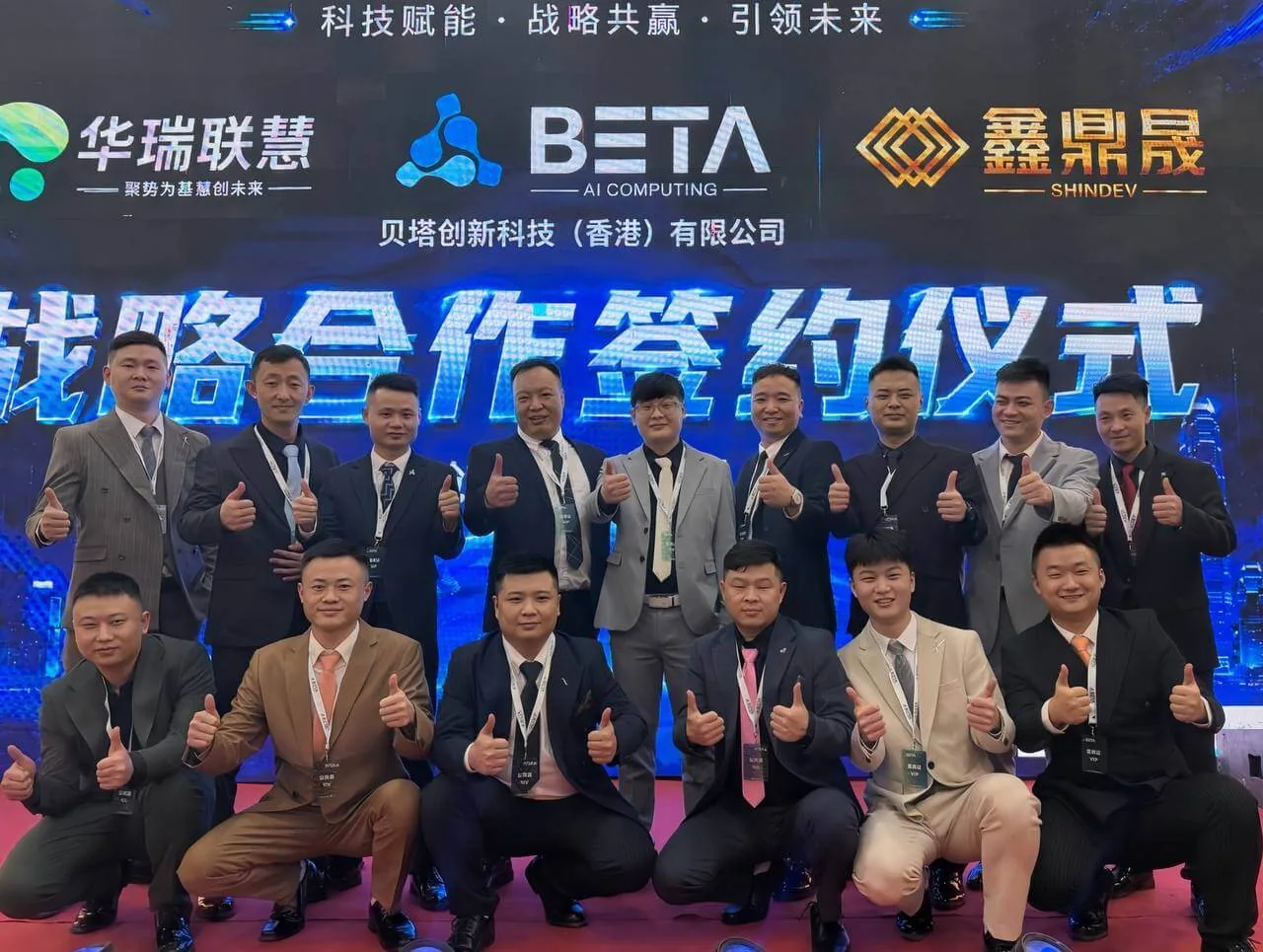
The strategic partnership between Huarui SmartLink and Beta Creative Technology is, at its core, a long-term exploration of industry, cycles, and trust.
Rather than focusing only on the most visible and fashionable areas of the AI industry, we have chosen to direct greater attention toward the foundational layers that will ultimately determine the industry’s long-term development:
Computing power, energy, data centers, engineering delivery, and the intelligent infrastructure required for the future of Physical AI.
Because we believe:
Every truly transformative industrial revolution ultimately requires solid infrastructure beneath it.
Eighteen years is not an attempt to make a simple or deterministic prediction about the future.
Rather, it represents a shared willingness to confront uncertainty through a longer time horizon.
Technology will evolve.
Markets will fluctuate.
Capital cycles will change.
And the technological approaches considered leading today may be redefined tomorrow.
But certain principles are unlikely to change:
Respect for the real economy.
Recognition of engineering capabilities.
Discipline regarding risk boundaries.
Commitment to long-term value.
From 2026 to 2044, three six-year cycles represent not only a strategic roadmap for different stages of industrial development, but also a shared commitment to long-termism.
Huarui SmartLink hopes to work alongside Beta Creative Technology and a growing network of future industrial partners—not merely as participants in the AI wave, but as long-term builders of the infrastructure underpinning the AI era.
We do not chase every wave. We build the infrastructure capable of carrying the waves.
We do not bet on a single short-lived trend. We choose to walk for the long term with those who create genuine industrial value.
As AI moves beyond the digital world and increasingly enters robotics, autonomous driving, intelligent manufacturing, and the broader physical world, computing infrastructure will no longer support computing capacity alone.
It will become the foundation upon which the next generation of intelligent industries operates.
And that is the future Huarui SmartLink and Beta Creative Technology seek to build together.