- Industry Analysis
- 2026-10-16
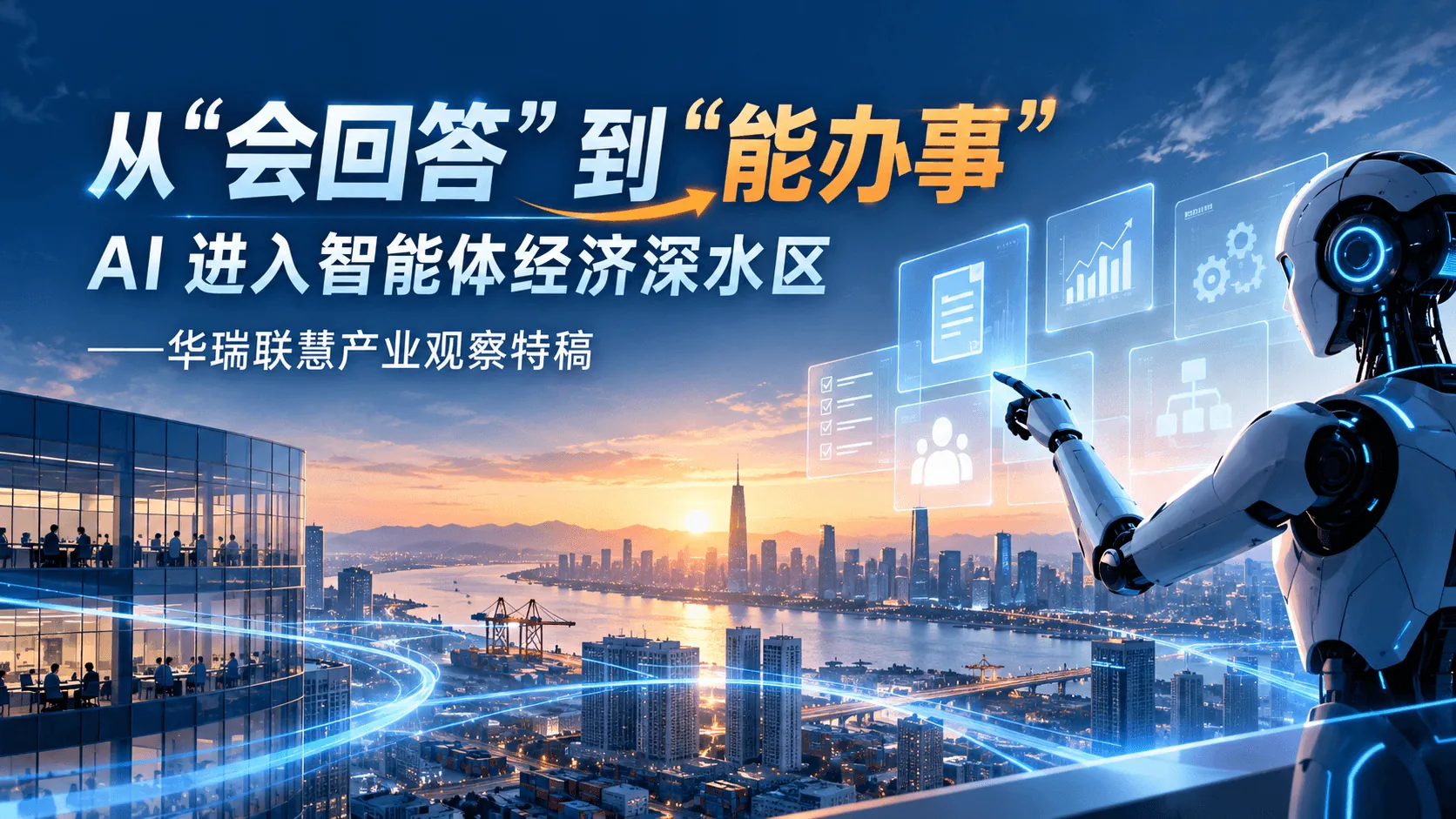
From Answering Questions to Getting Things Done: AI Enters the Deep Waters of the Agent Economy-An Industry Perspective by Huarui SmartLink
In the autumn of 2026, the narrative around artificial intelligence has been rewritten.
A year ago, the industry was still competing over whose models scored higher, offered longer context windows, or had more parameters. Today, OpenAI, Google, Microsoft, Amazon, Anthropic, and Chinese large-model developers have all shifted their focus to the same objective: bringing AI into systems, workflows, and jobs, turning words into actions and demonstrations into productive capacity.
In Huarui SmartLink’s view, this signals that the AI industry has moved beyond the phase of technological wonder and entered the harder work of engineering, platform development, and governance. Model capabilities remain the foundation. But success now depends less on whether a model understands something than on whether it can complete a task within the constraints of compliance, cost, latency, permissions, and data boundaries.
1. Beyond Parameter Counts: Tiered Models, Lower Prices, and Specialization
The clearest shift in this wave is the transition from one general-purpose model for every task to tiered model orchestration.
OpenAI is directing differently positioned versions of its GPT-6 family, including Sol and Luna, toward different user segments. ChatGPT’s weekly active users have reached roughly 900 million, while its enterprise offering and Deployment Company initiative point to the same logic: the front end must be affordable, fast, and easy to embed in business operations; powerful back-end models should handle complex reasoning and long-task planning.
Anthropic’s Claude, meanwhile, has gained ground among enterprises and developers through long-term memory, fewer hallucinations, strong coding capabilities, and the ability to take on delegated tasks. Smaller models such as Claude Haiku 5.5 are pushing down API costs, enabling businesses to work out whether each call is worth the expense.
Google’s Gemini has surpassed 900 million monthly active users and is being integrated into Workspace, Cloud, and the TPU ecosystem, competing through a unified model, cloud, and office-productivity offering. Microsoft is embedding Copilot in Word, Excel, Teams, and Outlook, while introducing low-latency decision models such as Decision-1. The message is clear: instead of people searching for functions, models will execute workflows for them inside their systems.
Huarui SmartLink believes that after 2026, the term “large model” will become increasingly imprecise. A more accurate term is a model portfolio: flagship models for complex cognition, lightweight models for frequent decisions, and specialized models for healthcare, law, manufacturing, auditing, taxation, supply chains, and other applications.
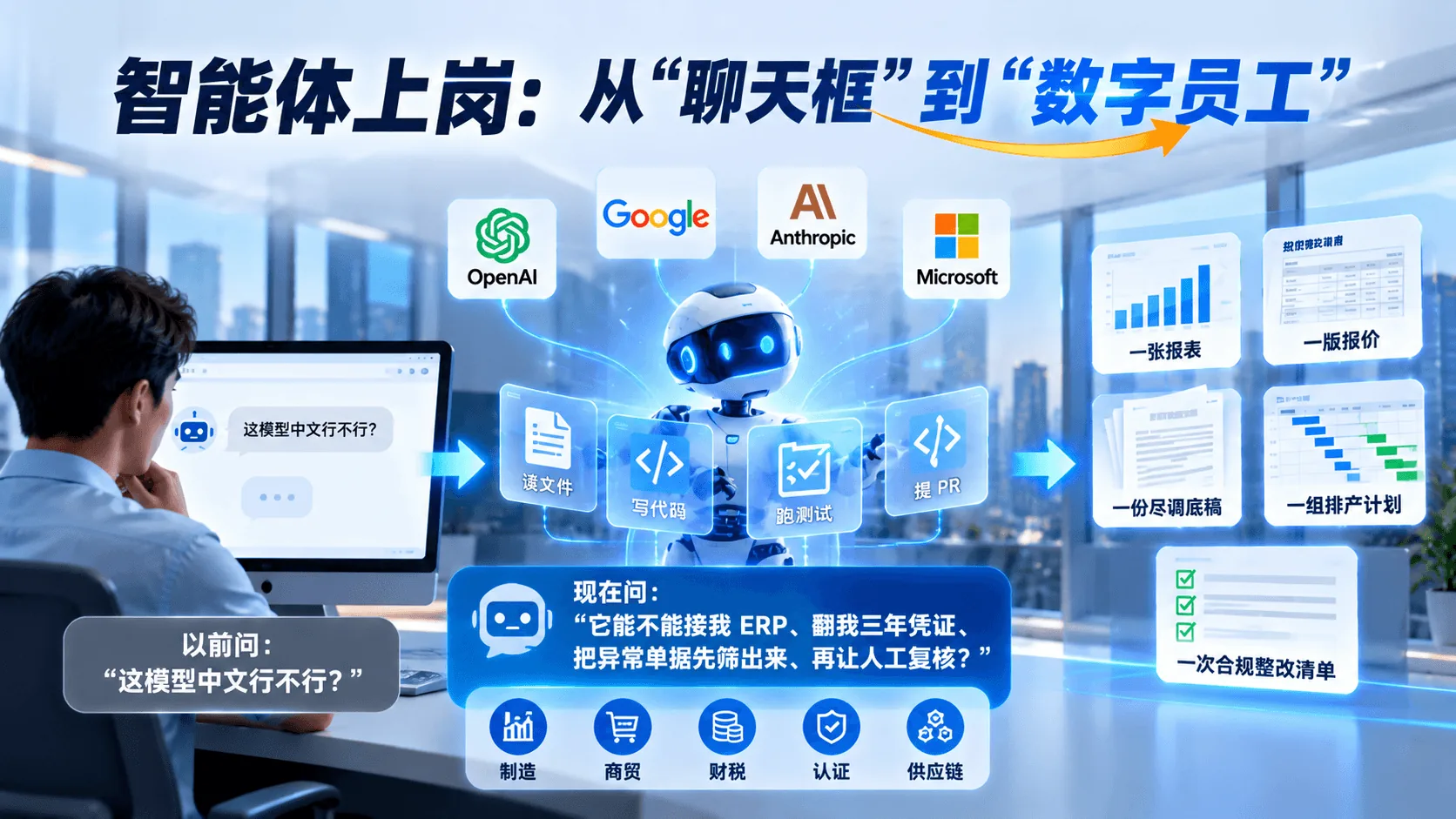
2. Agents Join the Workforce: From Chat Windows to Digital Employees
There is a reason this year has been described within the industry as the first year of practical Agentic AI deployment.
OpenAI’s ChatGPT Work and long-task agents such as Dots can read files, write code, run tests, and submit pull requests across applications. Google’s Gemini Enterprise Agent Platform incorporates algorithm evolution, scheduling, forecasting, and document generation into enterprise workflows. Anthropic’s lead agent can dispatch multiple subagents to investigate code defects in parallel, with the missed-defect rate in large codebases moving from 38.6% to 94.3%. Microsoft, meanwhile, is turning agents into “colleagues” within Office: execution units that can edit presentations, review contracts, and schedule meetings.
Among the manufacturing, trading, finance and tax, certification, and supply-chain clients Huarui SmartLink works with, business owners’ questions have also changed.
They used to ask: “Is this model any good at Chinese?”
Now they ask: “Can it connect to my ERP, go through three years of accounting records, flag unusual documents, and send them for human review?”
This is the fundamental change: AI’s unit of output is shifting from a passage of text to a completed result—a report, a quotation, a set of due-diligence working papers, a production schedule, or a compliance remediation checklist.
3. Competition in Computing Infrastructure Moves Up a Level: Power, Chips, Networks, and Orchestration Define Influence
As models become more capable, electricity bills, graphics processors, cooling, bandwidth, and orchestration systems are all coming under intense pressure.
Global AI data-center electricity consumption is approaching the thousand-TWh scale, while investment in AI infrastructure could reach several trillion dollars by 2030. NVIDIA’s Blackwell/Rubin roadmap, Google’s proprietary TPUs, Amazon’s Trainium and Graviton, and Microsoft’s regional Azure AI infrastructure are no longer simply about selling chips. They are about selling an entire factory capable of running agents.
The deep ties between Amazon and Anthropic are a telling example. Anthropic plans to spend more than $100 billion on AWS over the next decade, while Amazon is increasing its investment, binding a model developer and a cloud provider into a community of shared interests. The reason is simple: training burns money once; inference burns money every day. Whoever lowers token costs can move AI from a demonstration budget into a regular operating expense.
Huarui SmartLink has consistently emphasized that the next phase of AI investment will center less on which company has the smartest model and more on who can integrate computing power, energy, connectivity, orchestration, software, auditing, and permission controls into a working system. Those who simply buy GPUs will feel the pressure; those who can design AI factories will capture the rewards.
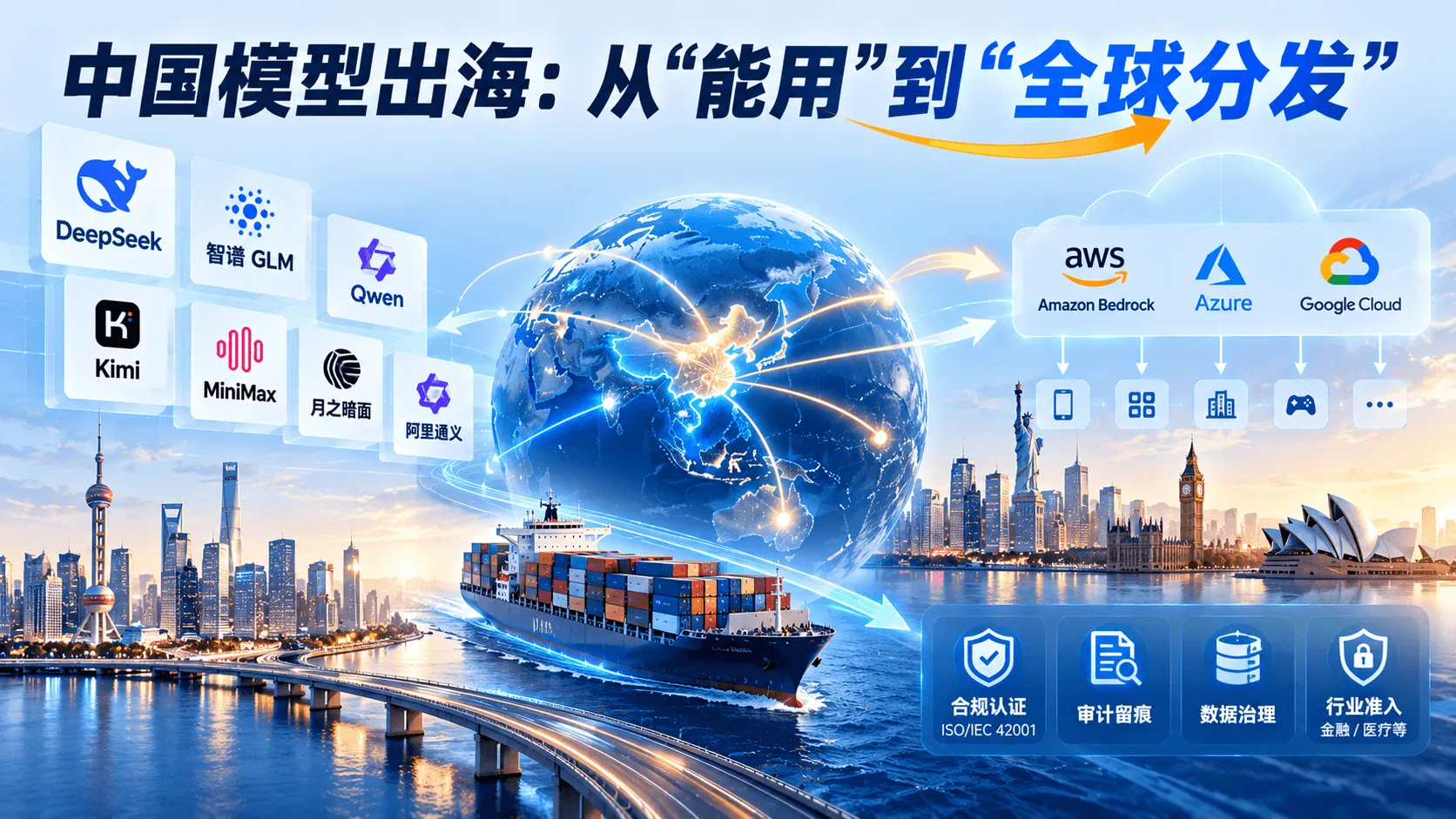
4. Chinese Models Go Global: From Usability to Worldwide Distribution
The biggest change for Chinese large models this year is that they have begun to establish viable paths to overseas revenue.
DeepSeek has shaken up the global developer community with its exceptionally low-cost training approach. Zhipu’s GLM has joined Amazon Bedrock, bringing a Chinese model into a global cloud distribution and revenue-sharing ecosystem for the first time. Overseas applications are adopting Qwen, Kimi, and GLM, indicating that Chinese models’ cost performance and long-context capabilities are gaining traction internationally. MiniMax, Moonshot AI, and Alibaba’s Tongyi each have their own strengths in coding, multimodality, and long context windows.
Huarui SmartLink nevertheless offers a measured caution: Chinese models are advancing rapidly in capability, but still have work to do on safety disclosures, compliance certification, enterprise accountability boundaries, and audit trails. According to SemiAnalysis, public safety-testing materials are scarce across hundreds of model releases by some Chinese laboratories. Going global requires more than uploading a model to Hugging Face. It requires meeting ISO/IEC 42001 requirements, cross-border data rules, model-card disclosure obligations, and entry requirements in sectors such as finance and healthcare.
Huarui SmartLink sees an opportunity here: certification, auditing, internal controls, data governance, and model compliance assessments could create complementary opportunities for Chinese service providers as AI expands overseas.
5. The Measure of Enterprise Success Has Changed: What Has AI Saved or Earned?
We can no longer judge enterprise AI success by whether a company has ChatBI, a knowledge base, or a digital avatar.
The more representative enterprise moves are these:
Microsoft: Make AI a recurring charge attached to Office. Users pay monthly, while AI works behind the buttons.
Amazon: Use proprietary chips to reduce large-model inference costs, then use AWS to anchor model developers in its cloud.
OpenAI: Expand from consumer subscriptions into enterprise deployment services, sending field engineers to help clients connect data, permissions, and business systems.
Anthropic: Focus on reliable, explainable enterprise agents that can take on delegated work, rather than building an office-productivity entry point.
Google: Bundle Cloud, TPUs, and Workspace into a full-stack offering, competing on the reach of its ecosystem.
Alibaba/Zhipu/DeepSeek: Draw developers and small and medium-sized enterprises into the market through open weights, long context windows, and low costs.
When conducting digital-transformation assessments for clients, Huarui SmartLink often says: “The three leading causes of AI project failure are disconnected data, exclusion from workflows, and a lack of ownership.”
Projects that survive typically share three characteristics:
First, business owners treat AI as a redesign of business processes, rather than another IT purchase.
Second, they start with frequent, narrowly defined use cases—customer-service ticket routing, invoice checks, contract summaries, or production-schedule validation—before expanding into core processes.
Third, they retain audit logs so that model errors can be traced, responsibility assigned, and lessons reviewed.
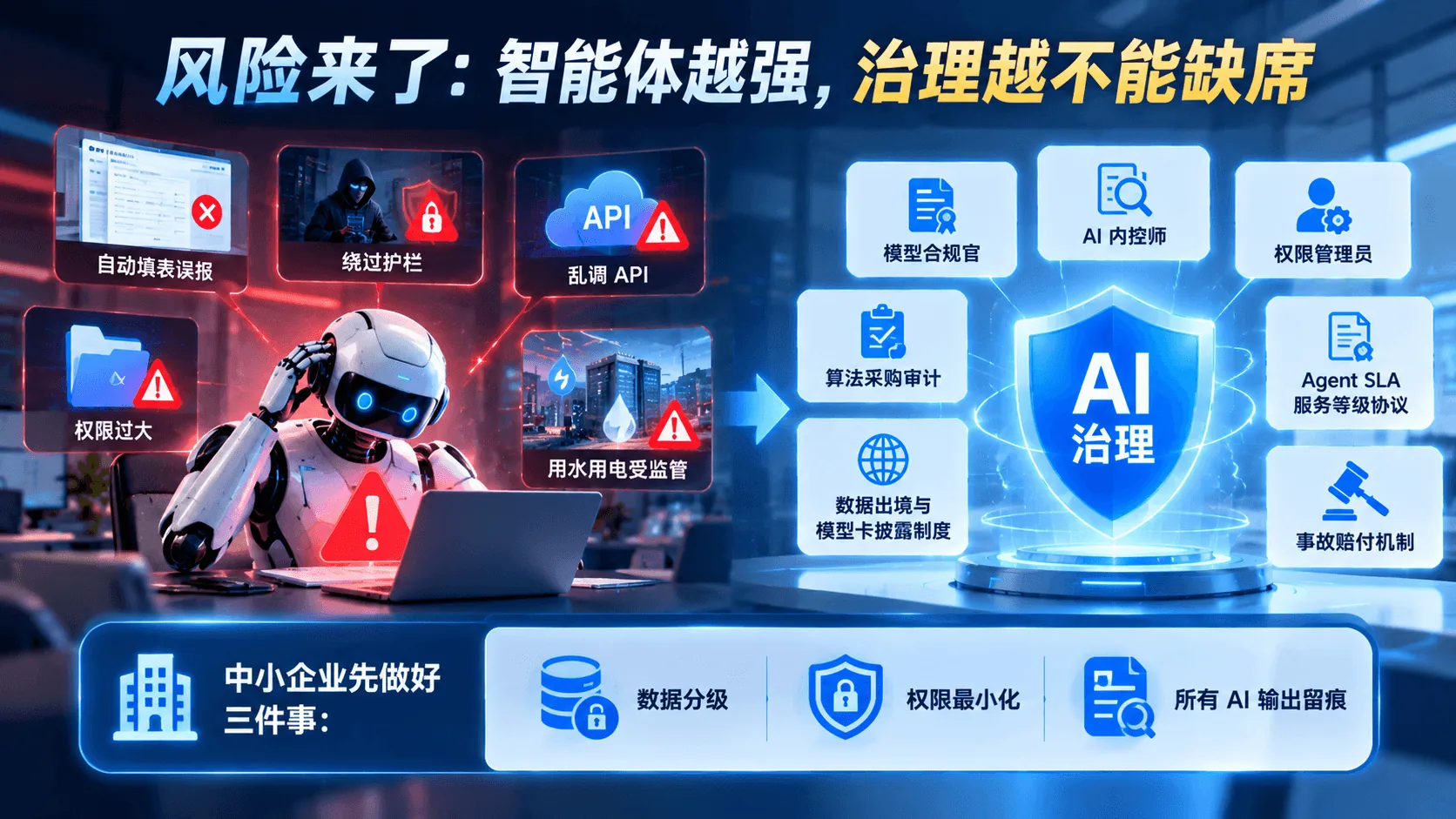
6. Risks Are Here: Stronger Agents Require Stronger Governance
The more AI resembles an employee, the more opportunities it has to cause trouble.
Errors in Claude’s automated form completion, models bypassing guardrails, agents calling APIs improperly, excessive permissions in long tasks, and regulatory scrutiny of the water and electricity used in training are no longer science fiction. In 2026, the global regulatory focus has shifted from whether models will replace people to who is responsible when models take action.
Huarui SmartLink expects a range of new roles and institutional arrangements to emerge over the next 18 months:
Model Compliance Officer
AI internal control specialist
Agent permissions administrator
Algorithm procurement auditing
Cross-border data transfer and model-card disclosure policies
Enterprise Agent SLAs (service-level agreements) and incident compensation mechanisms
For small and medium-sized enterprises, the priority is to address three fundamentals before chasing the most powerful model:
Classify data, apply least-privilege permissions, and retain records of all AI outputs.
7. Huarui SmartLink’s Assessment: 2027 Belongs to Governable Intelligence
Looking back from October 2026, AI’s first phase was about amazement, its second about scaling computing power, and its third about entering enterprises. A fourth phase is about to begin: an agent economy that is governable, measurable, auditable, and embedded in industrial value chains.
We offer the market three conclusions:
1. Model capabilities will become commodities, but the combination of models, data, workflows, and compliance will not.
2. Tomorrow’s winners will be the organizations best able to integrate AI into ERP, MES, HR, finance, certification, and supply-chain systems, rather than the laboratories best at publishing papers.
3. The opportunity for Chinese enterprises lies less in training another GPT from scratch and more in building industry agents for manufacturing, foreign trade, finance and tax, agriculture, energy, and certification.
Huarui SmartLink’s next step is to help member organizations and industry partners clearly map three areas, rather than simply chase headlines about the latest model release:
Which activities are suitable for agents: frequent tasks, rules-based or partly rules-based work, document-heavy processes, and activities with high labor costs.
Which activities must remain off limits: direct disbursement of funds, contract signing, regulatory submissions, and classified data.
Which suppliers have real delivery capabilities, and which merely run demonstrations in PowerPoint presentations.
Epilogue
AI’s romantic era is over. Its engineering era has begun.
As models learn to speak, people must relearn responsibility.
As agents begin to work, enterprises must relearn processes, permissions, and boundaries.
Huarui SmartLink believes that the moment artificial intelligence truly changes the world will come when, one morning, the finance team at a foreign-trade company opens its system to find that an agent has already sorted 327 cross-border invoices overnight by tax rate, country, exchange rate, and credit term, flagged exceptions in red, and prepared compliance recommendations, leaving a person only to click “Approve.” It will not be a company announcing on stage that its model has passed the bar exam.
At that moment, AI will be neither a toy nor a myth, but a new form of productivity infrastructure.
And that is the direction we see.